




Under the Boulevards and Behind the Doors: Paris’s Hidden Stories
Paris has its iconic checklist—the Eiffel Tower, Champs‑Élysées, the Louvre. But for every postcard view, there are quiet secrets tucked behind façades that feel like they were meant to be discovered rather than broadcast. There are hidden rivers waiting to be reborn, lush green sanctuaries away from the boulevards, and museums frozen in amber, offering an intimate glimpse into the city’s soul. These are the Paris experiences French Quarter Magazine editors and local insiders love—the ones that reward curiosity, exploration, and a willingness to wander just a bit off the expected path.
Below are three of Paris’s best‑kept secrets that will change not just what you see in the city, but how you feel about it.
The Forgotten River Beneath the Streets: Rediscovering the Bièvre
Paris is synonymous with the Seine, its grand central artery of life and legend. But beneath the city’s glazed boulevards runs another waterway—quieter, buried, and almost forgotten. The Bièvre River once wheeled through the southeastern edge of Paris, its modest currents powering tanneries, tapestry workshops, and the rhythms of everyday life long before Haussmann’s sweeping 19th‑century renovations buried it under stone and street.
Today, the Bièvre is experiencing a kind of renaissance.
Most visitors will never glimpse its water, but if you wander through the 13th or 5th arrondissements—particularly near Parc Kellermann—you may catch subtle hints: metal markers in the pavement, the faint murmur of water, and stretches of green that follow its course. What was once a working river running openly through villages on the edges of Paris became, by the early 1900s, a victim of pollution and urban expansion. Baron Haussmann’s urban plan, with its signature boulevards and grand façades, largely paved it over.
But the city is now “daylighting” the Bièvre—a term urban ecologists use for restoring buried rivers to daylight once again—as part of a broader vision for environmental resilience. Groups like the Friends of the Bièvre have been advocating for portions of the river to be uncovered, not just for flood mitigation and improved biodiversity, but as a living, breathing piece of Parisian heritage. Work is already underway in suburbs like Arcueil and Gentilly, and sections within the city are slated for restoration before 2026.
Walking the streets above its mapped course becomes a kind of treasure hunt: an architectural plaque here, a trickling fountain there, each a whisper of the water that once flowed freely. Imagine rediscovering Paris through water—not the vast Seine, but this shy, smaller tributary that once made this site attractive to craftworkers and residents centuries ago. Rediscovering the Bièvre is not just about ecology. It is about reconnecting with the layers of Paris that settled beneath memory and stone.
Secret Gardens: Hidden Green Oases Amid Urban Splendor
Paris is leafy and green at first glance: majestic parks like the Tuileries or the Bois de Boulogne invite wide‑eyed admiration. But beyond these celebrated lungs lie hundreds of intimate hideaways, gardens so secluded that their entrances are easy to miss and their serenity unmistakably precious. These are spaces that feel like personal retreats—the city’s best antidote to bustle.
With more than 400 gardens and green spots throughout the arrondissements, Paris is quietly nurturing its vision to become Europe’s greenest city by 2030.
Here are a few standout retreats:
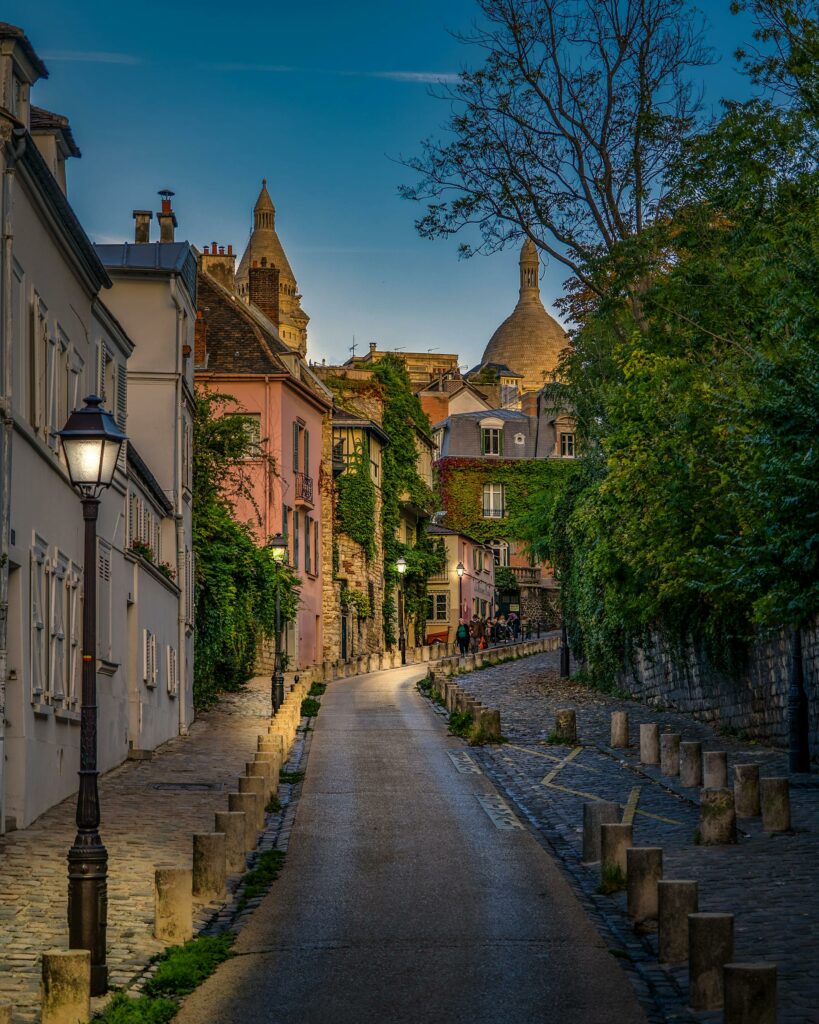
Hôtel Particulier Montmartre (18th Arrondissement)
Hidden behind charming doors near Sacré‑Cœur, this former Hermès family mansion harbors a magnificent wraparound garden designed by Louis Benech—the same landscape architect of the Jardin des Tuileries. In summer, the Grand Salon restaurant spills out onto shaded terraces under magnolia and ivy‑kissed trees. A lunch here could just as convincingly be set in the French countryside as in Paris proper.
The garden’s sense of classic elegance, paired with a delicate modernity in presentation and cuisine, encapsulates Paris’s quiet sophistication—a space that feels transported from another era yet utterly present.
La Vallée Suisse (8th Arrondissement)
Nestled off the world‑famous Champs‑Élysées, this 1.7‑acre hideaway feels almost surreal given its proximity to one of the busiest corridors in the city. Vine‑covered stone archways, maples, bamboo, lilacs, and even a small pond with a waterfall create a microcosm of tranquility. It’s a reminder that sometimes the most unexpected urban escapes are hiding in plain sight.
Square Roger‑Stéphane (Saint‑Germain‑des‑Prés)
Just steps from the bustling Left Bank cafés, this square is a soft escape: gentle lawn, leafy shade, and benches that feel purpose‑built for conversation or quiet reading. When the city feels too vibrant, this is where Parisians retreat to think, rest, and observe.
These secret gardens are proof that Paris’s green identity isn’t only in its grand boulevards or sprawling parks. It is in the pocket sanctuaries that unfold like surprises—where the air smells sweeter, the hum of the city feels distant, and time seems to pause just a little longer.
A Museum Frozen in Time: Musée Gustave Moreau
Paris has no shortage of museums, but many visitors flock to the Louvre or Musée d’Orsay, leaving lesser‑known treasures to those who love art and intimacy. One of the most enchanting among these is the Musée Gustave Moreau, a museum that feels less like a gallery and more like an artist’s private world preserved in amber.
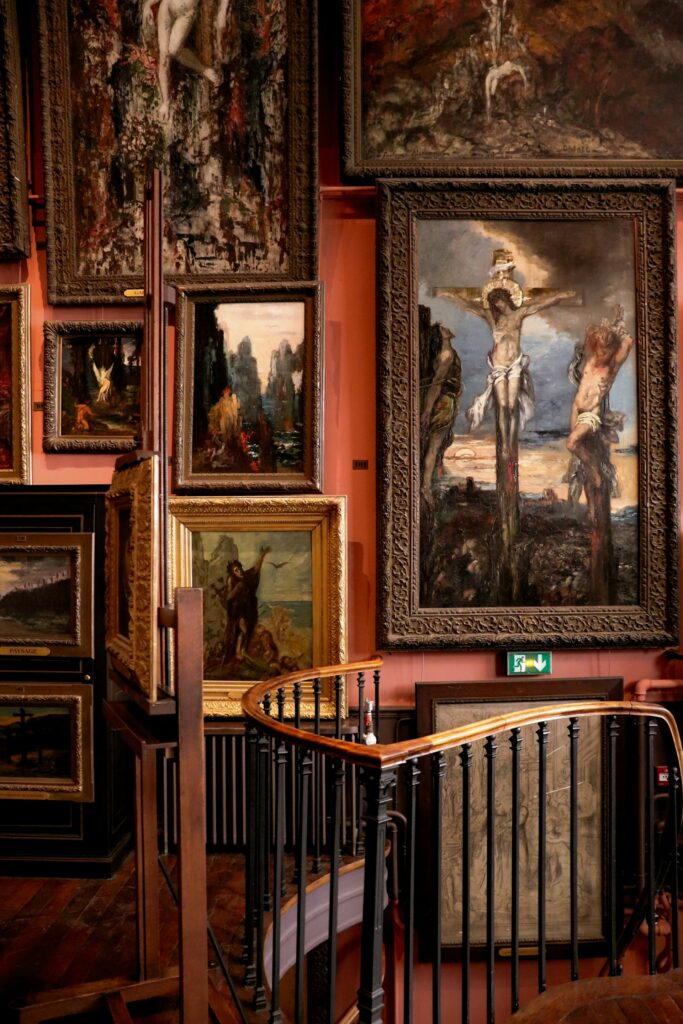
Located in the 9th arrondissement at 14 rue de la Rochefoucauld, this museum occupies the former home and studio of Symbolist painter Gustave Moreau—the visionary behind some of the most imaginative paintings of the 19th century. Moreau designed the space with intention, and today the galleries remain virtually untouched since his death in 1898.
Stepping inside the Musée Gustave Moreau is like stepping directly into the artist’s mind:
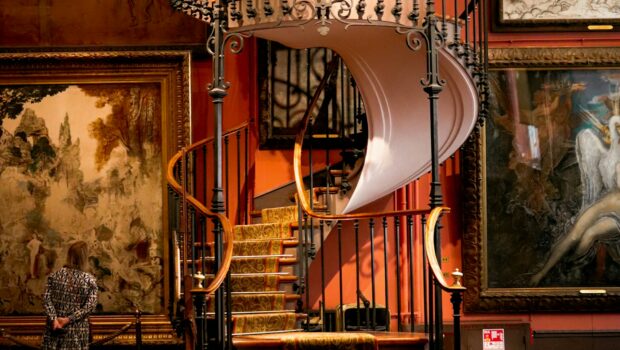
- There’s the spiral staircase that elegantly threads through the floors, mimicking the introspective journey through Moreau’s work and life.
- The studios contain more than 6,000 paintings and sketches—walls saturated with color, imagination, and the creative forces that drove one man’s lifetime devotion to art.
- Moreau’s own living quarters—his desk, materials, and artifacts—remain arranged as if he might return at any moment to fetch a brush.
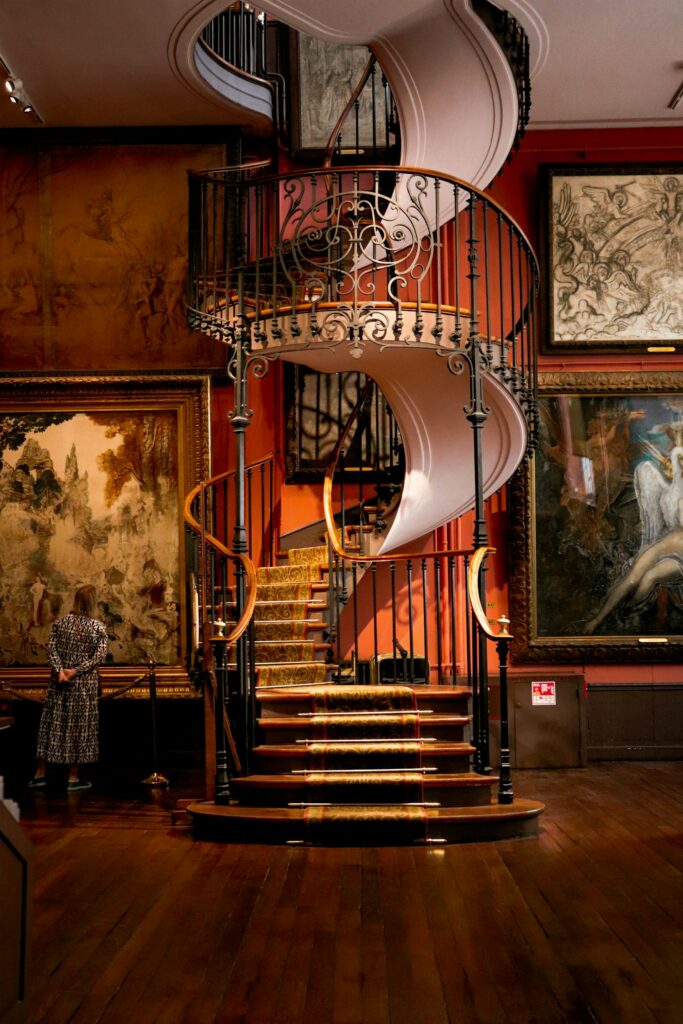
What elevates this place from a museum to a sacred space is its preservation of creative atmosphere: the light that falls through tall windows, the preserved furniture, the way the artworks lean into each other like collaborators in an eternal symposium. It is an intimate museum anchored not in grand narratives or tourist statistics, but in the living heartbeat of an artist’s inner life.
Visitors linger here longer than expected. They wander slowly. They return again. And often, as they stand looking at Moreau’s fantastical imagery, they feel the rare kind of stillness that art used to feel like—before crowds, before schedules, before checklists.
Seeing Paris Differently
These three hidden gems—the Bièvre River’s quiet reawakening, Paris’s secret gardens, and the Musée Gustave Moreau’s time‑capsule experience—are more than points on a map. They are invitations to encounter Paris with depth, intimacy, and wonder. They remind us that a city is not just its landmarks, but the subtleties that linger beneath the surface—whispers of history, nature, and creativity.
Whether you’re tracing the underground path of a forgotten river, discovering a garden tucked behind walls, or moving quietly through an artist’s preserved sanctuary, you begin to see Paris not as a checklist, but as a conversation. Each step becomes a chance to witness something personally memorable, something that feels like a secret shared between you and the city.
Paris—brilliantly celebrated and quietly hidden—remains, quite simply, a place that never stops revealing itself.
Header Photo Credit: Photo by Celine Ylmz on Unsplash
About the Author

Geraldine Provost is a Paris-based freelance writer with a diverse portfolio of blog contributions covering travel, gastronomy, entertainment, and more. She specializes in sharing her experiences in luxurious hotels and has a keen interest in the art-de-vivre à la française. When she is not writing, she can often be found enjoying the sun of the southern region of France.
Related Posts

United Airlines Reconnects Capitals: Washington D.C.–Nice Nonstop Returns for Summer →

How Boston Neighborhoods Are Reimagining Social Life à la Parisienne →

Beyond the Strip: December Adventures and Holiday Escapes in Las Vegas →












Fantastic read! This article does an excellent job of breaking down what smart homes are and how they’re transforming modern…