



Year of the Horse, City of Lights: Lunar New Year in Paris’s Chinatown
An immersive journey into Paris’s Asian quarter during the most festive season of the year
In 2026, Chinese New Year — known variously as the Lunar New Year or the Spring Festival — falls on February 17. Celebrated across East and Southeast Asia from Vietnam to South Korea, Singapore and Malaysia, this ancient festival marks not just the start of a new zodiac year — the Year of the Horse, symbolizing energy, ambition and forward momentum — but also a season of renewal, family gatherings, and vibrant cultural expression.
While Paris is world-famous for its museums and monuments, one of its most evocative cultural celebrations unfolds far from the arrondissements of the Louvre and Notre-Dame: in the city’s largest Chinatown, located in the 13th arrondissement’s “Triangle de Choisy.”
The Heart of Paris’s Chinatown — The Triangle de Choisy
Paris is unusual among European capitals for having multiple distinct Chinatowns, but the most visible and celebrated is the bustling quarter bounded by Avenue de Choisy, Avenue d’Ivry, and Boulevard Masséna in the southeast of the city. Here, Paris’s urban grid gives way to neon shop signs, Asian supermarkets, patisseries, noodle bars, and temples — a vivid contrast to the Haussmannian façades at the heart of the city.

Access is easy via multiple Metro lines (Tolbiac, Olympiades, Porte d’Ivry and Porte de Choisy), reflecting the area’s deep integration into the everyday life of the French capital.
This district — sometimes called le Quartier Chinois — did not organically evolve like those of London or New York but grew out of post-war migration patterns. In the 1970s and 1980s, waves of Chinese and Southeast Asian refugees — many fleeing war or political upheaval in Vietnam, Laos and Cambodia — found affordable housing and business opportunities here, shaping it into a multiethnic Asian hub well beyond a single national identity.
Architecturally, the area is dominated by the Les Olympiades complex — enormous residential towers and elevated pedestrian esplanade built during the late 1960s and early 1970s as part of a bold urban experiment. Though initially criticized for its stark modernism, this “dalle” became the backbone of the neighborhood, housing shops, eateries, temples, a community garden and communal spaces that reflect the district’s dynamic life.
What to Expect During Chinese New Year
Every year, Chinatown’s streets and storefronts are transformed for the festivities: red lanterns, banners and symbolic decorations appear throughout the quarter, creating a vivid contrast against the winter skies of February.
The Chinese New Year celebrations in the 13th arrondissement are among the city’s most anticipated cultural events, with activities beginning in early February and building toward a crescendo in late February and early March.
According to program listings, the festival period in Chinatown runs roughly from February 13 to March 1, 2026, and includes a rich array of free public celebrations — from costume showcases and tea tastings to calligraphy workshops and concerts — all animated by traditional performances and community spirit. Highlights include:
- Han Style New Year celebrations (featuring traditional Hanfu costumes and cultural performances) on February 14.
- Lion dance inaugurations and street decorations on February 20.
- Chinese character arts events and workshops on February 25.
- Festival du Printemps community gatherings on February 28.
But the centerpiece is unquestionably the Grand Lunar New Year Parade, scheduled for Sunday, March 1, 2026, which draws hundreds of thousands of spectators along a vibrant route through Avenue d’Ivry and Avenue de Choisy. This procession showcases dragon and lion dances, traditional costumes, songs and rhythmic drumming, reflecting a colorful mosaic of Chinese, Vietnamese, Cambodian and Laotian influences in the neighborhood.

A Citywide Celebration
While the 13th arrondissement remains the focal point, Chinese New Year in Paris is decidedly city-wide. Other festive events include:
- A Chinese New Year parade on the Champs-Élysées on February 1, 2026, featuring dragon and lion dances, Hanfu processions and traditional music along the iconic avenue — a powerful blend of tradition and Parisian spectacle.
- Food markets and lantern decorations in Belleville, where another strong Asian community group stages a night market full of festive stalls and performances on February 19.
- Cultural showcases and workshops across the city in museums, galleries and parks that underscore the breadth of Lunar New Year traditions across Asia.
Why It Matters
For visitors and residents alike, Lunar New Year in Paris is a rare cultural confluence. It offers a chance not only to witness spectacular pageantry and engage with traditional art forms but also to visit an authentic urban community where Asian diasporas have shaped the cultural landscape of Paris itself.
From sipping bubble tea in a hidden café to watching a dragon weave through a sea of red lanterns, or shopping for fresh produce and exotic spices alongside Parisians and visitors alike, the experience brings Paris’s global identity to life during one of the world’s oldest and most joyous celebrations.
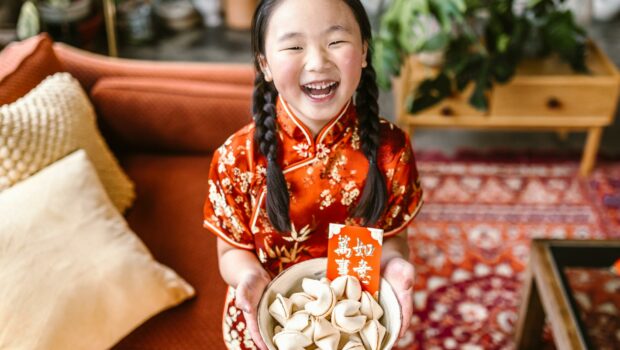
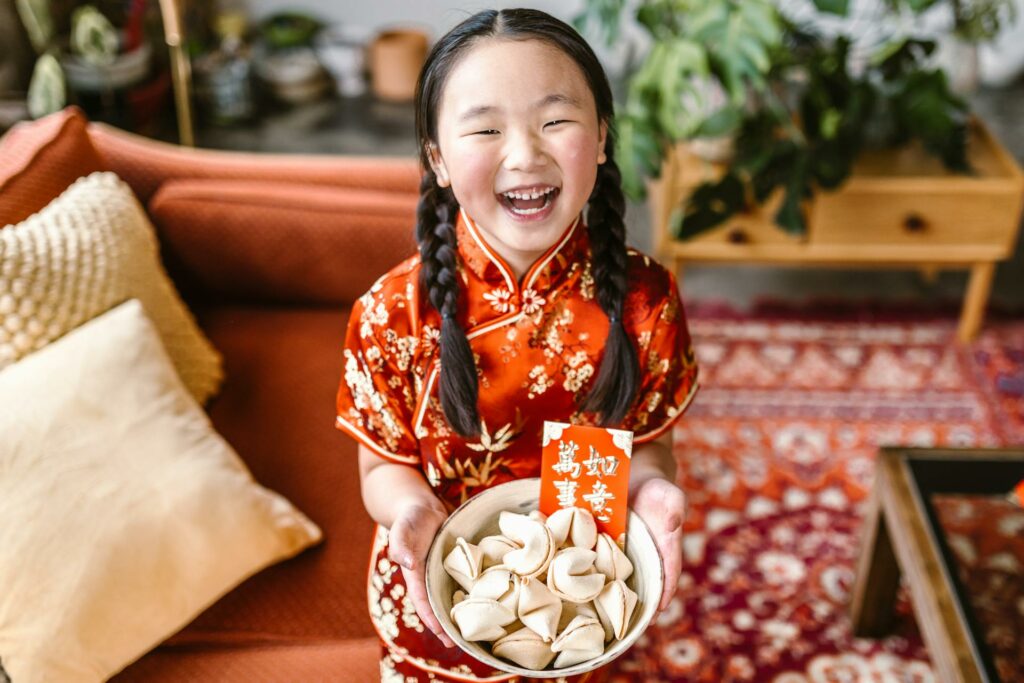
Header Photo Credit: RDNE Stock project https://www.pexels.com/photo/food-holiday-red-love-6691852/
About the Author

Isabelle Karamooz, Founder of FQM is originally from Versailles, France. Isabelle harbored a lifelong fascination with exploring the world. Her journey began at 17 when she seized the opportunity to study abroad in Rhonda, Spain, igniting a passion for travel that took her across continents. From vibrant Hong Kong to picturesque Ireland, from the historic streets of Italy to the enchanting landscapes of Morocco, she embraced diverse cultures and experiences, truly embodying the spirit of a global citizen. After several years of exploration, Isabelle found a sense of home in Los Angeles, where she immersed herself in the vibrant cultural scene while working at the French Consulate. With a deep-seated love for the arts and history, she pursued her academic endeavors, earning a Bachelor's degree in History from the University of California, Berkeley. Furthering her dedication to education, she has studied to pursue a Master's program in teaching at the University of Southern California, eventually sharing her knowledge and passion as a French instructor for aspiring students at UNLV and CSN in Nevada. Driven by her passion for storytelling and cultural exchange, Isabelle founded French Quarter Magazine, where she serves as the Editor-in-Chief. In this role, she orchestrates the publication's diverse content, from conducting interviews and pitching story ideas to capturing captivating moments through photography. Currently, she is channeling her creative energies into her first English-language work, a novel that delves into the compelling life of Coco Chanel. Filled with adventure, intrigue, and a touch of romance, her debut novel promises to captivate readers with its rich tapestry of history and emotion.
Related Posts

Monet’s Venetian Dream: Light, Water, and the Last Great Journey →

London Art Fair: Contemporary Creativity in January →
The Lost Wanderlust of Japanese Tourists—and the New Paths Toward France →











Fantastic read! This article does an excellent job of breaking down what smart homes are and how they’re transforming modern…