




Le Mal Aimé: A New Short Film, A Cultural Moment, and the Journey Toward Vegetarianism
This holiday season, a curious project titled Le Mal Aimé has been making waves in French-speaking media and beyond—not as a traditional feature film, but as a short cinematic work that uses familiar narrative tropes to explore empathy, perception, and, intriguingly, the question of how we relate to food.
A Short Film with a Big Question
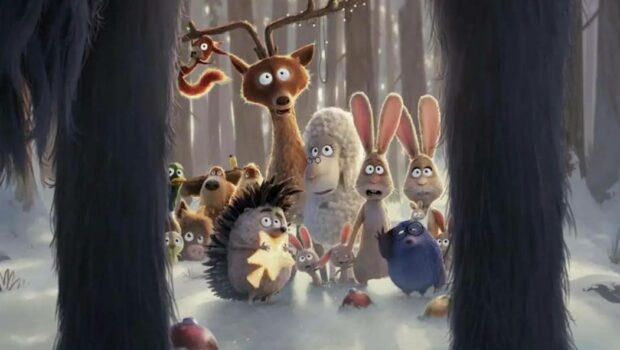
Directed by Victor Chevalier and released in 2025, Le Mal Aimé is a two-minute short film that blends charm and metaphor in a way that feels cinematic despite its brevity. The story centers on a young boy who receives a stuffed wolf at Christmas. But the real heart of the narrative lies in the question posed by the scenario: How can we learn to love—or at least understand—the “big bad wolf” who seems frightening, unless his behavior stems from something deeper, like his relationship to food?
This concept resonates beyond holiday storytelling. At its core, the film asks viewers to consider how habits, instincts, and cultural narratives shape our ideas of what is “good” or “bad”—in wolves, in ourselves, and in the foods we choose to eat. The title itself, Le Mal Aimé (“The Unloved”), becomes a mnemonic for all that is misunderstood or judged too quickly, including dietary choices that stray from tradition.
In English Version:
In French Version:
From Viral Advertising to Meaningful Dialogue
In 2025, the familiar French pop hit Le Mal Aimé—originally a song by Claude François—was revived in a Christmas advertising campaign in France featuring an animated vegetarian wolf that captures hearts across the internet.
Unlike typical holiday ads, this piece wasn’t just about branding; it became a cultural conversation piece. The animations—praised for their soulfulness and charm—depicted a wolf who transforms from fearsome to lovable through shared meals and kindness, implicitly challenging traditional notions of who deserves compassion. Millions of viewers have shared and commented on the short film online, making it a surprising touchpoint for conversations about empathy, animal ethics, and how food choices shape identity.

Vegetarianism: From Personal Choice to Cultural Debate
The idea of changing one’s diet for ethical, environmental, or health reasons is hardly new. Yet it remains one of the most personal—and at times polarizing—decisions a person can make. Stories from cinema and media illustrate this dynamic vividly. In the 2009 South Korean film Vegetarian, for instance, a woman abruptly gives up meat, disrupting family dynamics and sparking questions about autonomy, societal expectation, and inner peace.
While Le Mal Aimé tackles these themes metaphorically through its wolf protagonist, it connects to real-world experiences of people who choose vegetarian or plant-based lifestyles. Becoming vegetarian can be a journey of reconciling deeply held cultural beliefs with evolving ethical frameworks. It invites reflection on how we view animals, how we prioritize sustainability, and how personal habits intersect with broader environmental concerns.
Why Stories About Food Matter
Films, short films, ads, and art that touch on food—whether literally or symbolically—do more than entertain. They open a door to conversation around what it means to make conscious choices in a world where diets are deeply tied to tradition, identity, health, and morality.
Le Mal Aimé may be brief, but it is emblematic of a shift in storytelling: one that doesn’t shy away from asking difficult questions through accessible and emotionally resonant means. It reminds audiences that sometimes the stories that linger the longest are not those that preach, but those that provoke thought through empathy.
About the Author

Isabelle Karamooz, Founder of FQM is originally from Versailles, France. Isabelle harbored a lifelong fascination with exploring the world. Her journey began at 17 when she seized the opportunity to study abroad in Rhonda, Spain, igniting a passion for travel that took her across continents. From vibrant Hong Kong to picturesque Ireland, from the historic streets of Italy to the enchanting landscapes of Morocco, she embraced diverse cultures and experiences, truly embodying the spirit of a global citizen. After several years of exploration, Isabelle found a sense of home in Los Angeles, where she immersed herself in the vibrant cultural scene while working at the French Consulate. With a deep-seated love for the arts and history, she pursued her academic endeavors, earning a Bachelor's degree in History from the University of California, Berkeley. Furthering her dedication to education, she has studied to pursue a Master's program in teaching at the University of Southern California, eventually sharing her knowledge and passion as a French instructor for aspiring students at UNLV and CSN in Nevada. Driven by her passion for storytelling and cultural exchange, Isabelle founded French Quarter Magazine, where she serves as the Editor-in-Chief. In this role, she orchestrates the publication's diverse content, from conducting interviews and pitching story ideas to capturing captivating moments through photography. Currently, she is channeling her creative energies into her first English-language work, a novel that delves into the compelling life of Coco Chanel. Filled with adventure, intrigue, and a touch of romance, her debut novel promises to captivate readers with its rich tapestry of history and emotion.
Related Posts

Agnès Varda’s Paris: An Intimate Look at a Cinematic Icon →

Famous Movie Locations You Can Actually Visit →

Étoile: A Ballet Drama Bridging New York and Paris →









Fantastic read! This article does an excellent job of breaking down what smart homes are and how they’re transforming modern…